

I saw my first short-horned lizard (aka horny toad) in July! I was camping near Winnett while helping a friend with the Montana Moth Project. As we gathered our traps in the morning, I spotted this guy scurrying across some rocks. This cool creature is a denizen of sagebrush and grassland habitats. There is anecdotal evidence of significant declines in short-horned lizard populations. If you’ve spotted one too, let MT Fish, Wildlife and Parks know by submitting observations on their website.

It’s hard to focus on reading my book when Maverick is peering into my soul. Those eyes of his speak volumes.
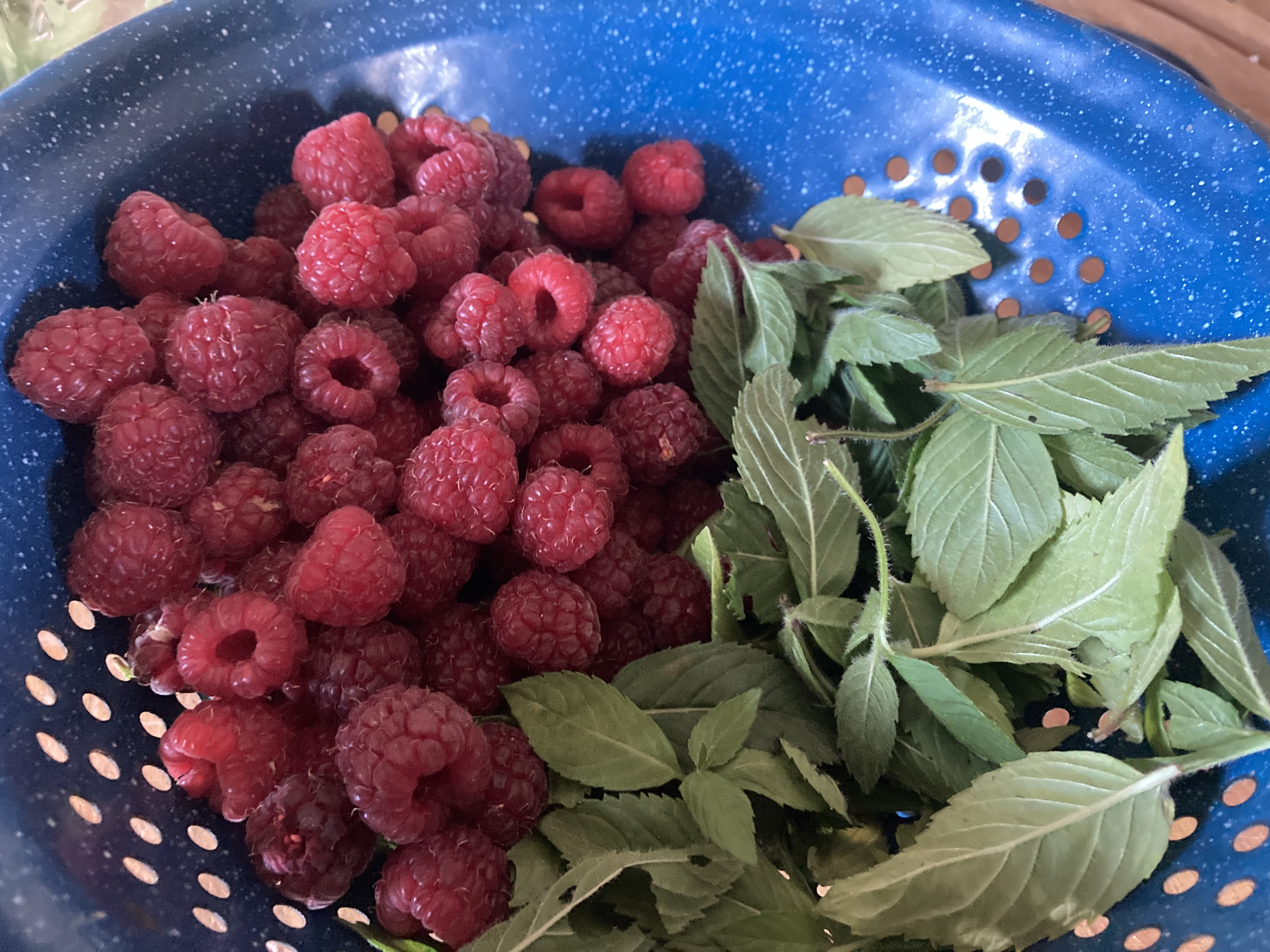
Gifts from the garden! We had SO many raspberries this year. Every couple of days I would gather a pint or two to munch throughout the day. Even so I overlooked several ripe, heavy berries that fell to the earth for other critters to enjoy. The mint also grew prolifically. I gathered and dried about 12 cups of leaves. When the cooler days of fall arrive, I’ll turn some of the mint leaves into a salve and make tea with the rest. A BIG thank you to my mom for taking all the dried leaves off the stems and putting them into jars for storage!
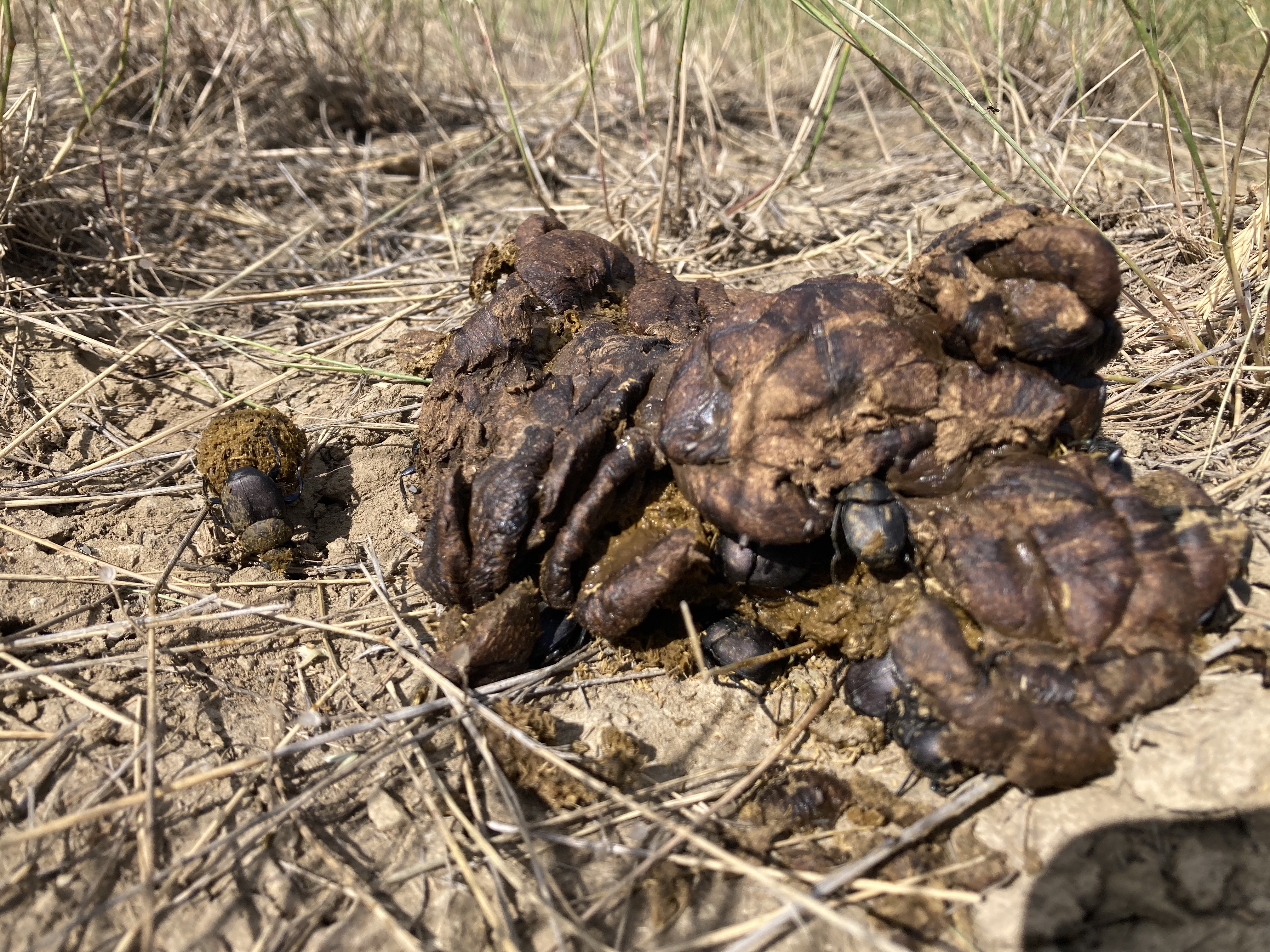
Dung beetles at work! The industrious male beetles create balls out of fresh dung, and if a female likes the look of his ball, the pair rolls the ball away and buries it. They then mate and she lays an egg in the ball so that the hatchling will have plenty of food. In this article from the San Diego Zoo I learned that “Some dung beetle mothers stay with the ball for two months, cleaning the larvae (called grubs) that hatch and removing their feces.” This is a great example of an invertebrate parenting strategy, which are more common than one might expect. Dung beetles employ a very effective method of manure dispersal that helps incorporate and recycle nutrients into the soil across the prairie. I’m always excited to see a manure pile covered in beetles!
 Coulee Creek Ranch